How to Make Art Into a Card for Games
Blank Cards: How Do Y'all Create a Card Game From Scratch?
A footstep-by-stride instruction manual covering research, conceptualization, design, testing, and polishing.
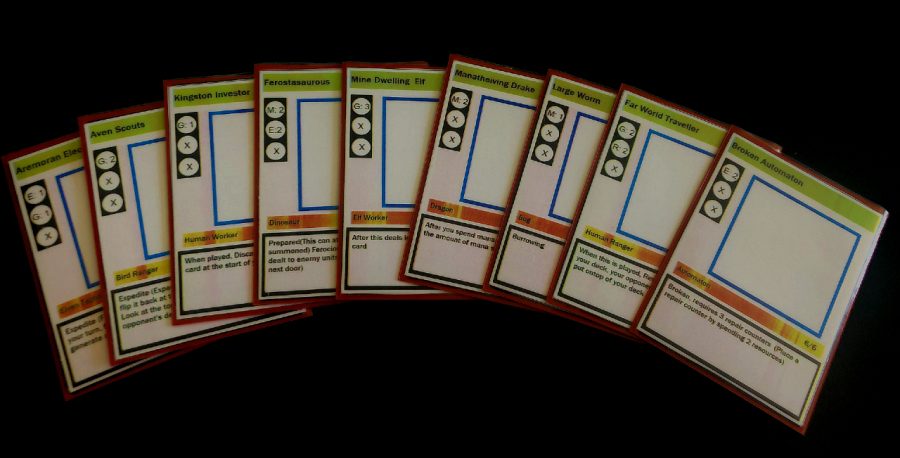
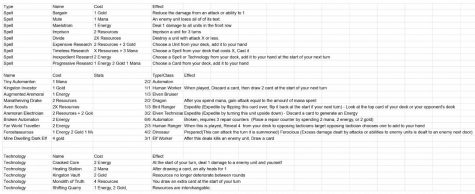
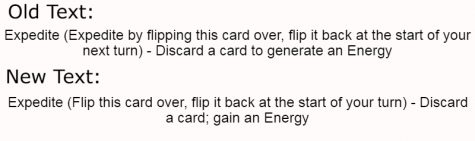
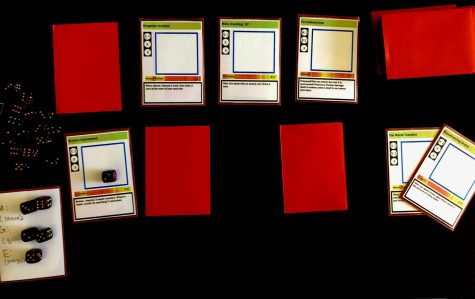
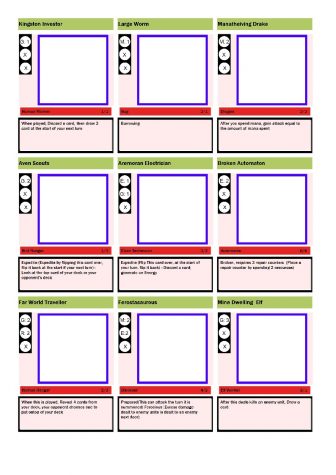
Menu games are a long-standing grade of entertainment, whether ane plays the western game of poker, the eastern game of Hanafuda, or the global game of Yu-Gi-Oh. Played worldwide by millions of users, card games take ingrained themselves into our media and civilisation. Simply how are these games made? Do you start with a theme, similar to how Hanafuda was designed, with the artworks of flowers and the seasons taken into consideration? Or practice you lot start with a mechanic like Yu-gi-oh, which uses multiple decks and a zoned playing field? Let us effigy this out together, and go through the steps of constructing a card game. Enquiry Phase The outset step of designing a card game is researching existing ones, which volition provide you with invaluable data on how and what to blueprint, past assuasive you lot to cater to the likes and interests of players. For the card game that I designed, the research phase took around 6 months. In this process, I played trading card games such every bit Magic The Gathering (one of the oldest TCGs with one of the biggest player bases), digital CCGs similar Legends of Runeterra (a digital collectible card game fabricated by Riot Games), as well every bit tabletop card games, including Terraform Mars and Dear Letters. Past playing these games, I was able to get a grasp of how these bill of fare games are different from each other. In this phase, I also looked at how specific games take evolved over the ages and the many problems that players take had with the electric current iterations of these menu games. This method follows the players and allows y'all to understand what people truly want to play. A more than scholarly version of this process would entail reading game design books and game design blogs. Corking examples of game design books and blogs include The Art of Game Blueprint: A Volume of Lenses by Jesse Schell, Marking Rosewater's Blogatog , Making Magic , and Hearthstone design squad'southward articles. These articles and books oftentimes bring you tried-and-truthful methods regarding game pattern. Whether it is the bottom-upward card design used by the Magic the Gathering design squad, which entails a pattern philosophy of remainder/mechanics first and flavor second, or Hearthstone's unique class identity model, these sources will e'er bring you some tidbits of wisdom. Yet, this process does focus on the developer'south insight and what they accept at the end, rather than the exact wishes of the card gaming community. Some other way to go through this phase is by watching game designers' interviews and presentations. This method includes watching web series such equally Extra Credits, a YouTube web series that dissects game design, and Escapist's Dev Diary , which follows a game maker's journeying in creating a game. GDC's creator presentations, such as Twenty Years, Twenty Lessons Learned , which explores the many lessons that a game designer went through in his 20 years of designing card games, also works as a great source of information for blueprint philosophies and guidelines. This approach is often the near direct, as it shows you the programmer's procedure and what yous need to know in order to progress with your designs. All of these methods are very singled-out and work for different people, but sometimes it takes a mix of all iii forms of study, in club to understand what you lot are making and how it all comes together. And then, when information technology all said and washed, you can move on to the next phase, that of conceptualization. Conceptualization Stage Now, nosotros reach the hardest and nearly important phase of card game development, the conceptualization phase. In this stage, the discussion transitions from the accomplishments of others to the accomplishments that y'all yourself volition attempt. Some things that need to be done include designing the basic mechanics of the game, the set-up / rules, every bit well equally creating the complex core game mechanics of health totals, resource counters, playing fields, and card types. For the beginning step of the conceptualization stage, you should invariably know your target audience. You need to determine who the game is for and create game mechanic complexity in order to match your demographic. For my game, I chose to brownnose to a younger demographic that would comprehend both teens and young adults. This would mean that the base of operations mechanics of the game would require a more complex, just not overbearing, tutorial, introductory stage, and a common theme that would resonate with the intended age group. In my interviews with the Tabletop Club, I institute out that this blazon of simple complication often draws people in. "Information technology really depends," said Justin Cheng '23. "For me, it brings me in. The but example where information technology does repel me is when it uses a paragraph of text or when information technology does get to a point where it'southward merely complex for the sake of existence complex." Cheng'due south enjoyment of complexity comes from forming strategies that are interesting and complex without being hassled by paragraphs of text. However, if you have a younger audience, yous may want a simpler set of mechanics that could be picked upwardly and played. For example, Processed Land and Trouble are board games made for children with rules and then simple that anyone tin can pick the game up and play. In comparison, if you have an older audition, yous can oftentimes explore darker themes, more than circuitous strategies, and more levels of play. Examples would include games such every bit Warhammer 40k and Chess. The 2d step is to blueprint the game mechanics, such as battlefields and game pieces. This step is very important. In a poll that surveyed members from the Tabletop Club and the Esports Club – Bronx Science's premier club for playing games, statistics showed that 73% of the participants placed game design and game mechanics as the primary reason they play games. In my item case, I chose to create an army builder-style carte game that used iii types of different resources (Mana, Gold, Free energy), three different card types (Units, Spells, Technology), and a diamond-shaped battleground. Still, in your game, you can cull to not accept a battlefield or a resource mechanic. The concluding step is the numbers and more technical part of the design, focusing more on how the game is played, the goals, and the rules. In a circuitous game, rules may bridge books, or maybe the entire game, with abstruse goals and 'how to play' instructions that are left for the players to determine. An case of this would be Dungeons and Dragons, where the unabridged game is based on two rule books. Nonetheless, in a more than unproblematic game, there are usually defined rules that are integral for the game to progress. Winning in these simple games is often more clearly divers; for case, your goal might be to "fulfill 10 condition" or "reduce the opponent to 0 health." For the game I made, I chose to define the win condition every bit "reduce the opponent to 0 health or fulfill a condition on a menu," and piggybacked off of the basic rules of Magic the Gathering as a template for design. With that, we take a functional template for a game composed of rules, a theme, and a fix of mechanics. Now, nosotros tin can finally start designing cards. Design Phase Now that we have a concept for how the game functions and a grasp on the mechanics of the game, it is time to start formatting and designing the cards. In the design phase, you create the thematics, the cards, and the battlefield. The showtime step in creating a card is to determine how you are going to create the card. This may sound redundant, simply the bespeak is to choose whether you are going to design your first cards around flavor (top-downwardly pattern method) or unique mechanics (bottom-upwardly blueprint method). Both of these are valid design methods, just information technology is all based on personal gustation. I used the bottom-upwards design method in my game. While talking with the Tabletop Gild, many members stated that mechanics were essential towards explaining why people played card games, just that interesting themes besides played a big role in why they pick them upwards. In an interview, Jacob Rubakha '22 noted, "Sometimes it would make sense to start with the theme you are trying to build a game for and so recall nigh the mechanics, while sometimes you might come up up with a specific mechanic that seems very fun and offset with that, followed by trying to encompass that in a theme." In my case, I had an interesting mechanic for my start card. At present, the 2d step is to create cards in spreadsheets. At present, this may not seem especially fun, simply spreadsheets are often the best tool for card cosmos; they permit you to list card names, card texts, costs, descriptions, and season texts right next to each other. This way, you tin can create a lot of cards in a condensed space without the need to create a file for each card. If you lot are creating a more complex card game, you may want to split your spreadsheet into multiple spreadsheets separated by card blazon, since information technology would clear out space for y'all to design each menu. In this design process, remember to brand interesting mechanics for the cards and determine how much flavor is in each card. In card games, the season is the menu's theme. An example would exist a bird menu having a flight-like ability or an archer having a ranged attack. Having an appropriate corporeality of season makes the game more enjoyable and immersive for the player. Nevertheless, never throw balance to the wayside for the sake of flavor. "Flavor is important, every bit it keeps people interested in the story and lore, and information technology keeps continuity and allows things to make sense. But it should never crusade residuum issues," said Fiona Zhou '23. The third stride is to create a card template using a drawing application. Creating a carte du jour template should follow a few basic rules: Rule One: The primal parts of the card should stand out. This means that the proper name of the card, the furnishings of the card, and the cost of activating or playing the card should be distinct and never obstructed. Rule Two: The color should differentiate the cards. Color is neat for menu artworks and perchance unique foiling, merely the color is central in helping differentiate how the card looks. A not bad example of this is seen in Magic the Gathering where the five principal colors – White, Blue, Black, Red, and Green – are emphasized on cards of the corresponding color. Finally, Rule Three: Continue the carte make clean and simple. At that place may be temptations to splash colorful arrays onto the carte in social club to brand everything look pretty, but as noted previously, when you do this, you are going to obstruct the player's ability to discern the cards. In the case of the instance game, I created this bones template using a GNU Prototype Manipulation Program that corresponds a colour to an aspect of the carte du jour. Nonetheless, in simpler card games, you only really need to follow rules one and two. They normally accept less information to convey and are more theme-based; in those cases, the visual style of the card is primal. The final step is transferring your spreadsheet data to the card template. This process is usually quite arduous and time-consuming since you are non doing annihilation new. Information technology simply combines the products of the previous two steps and creates something new. However, the key in this step is to make sizes proportional to standard card sizes to allow them to fit into sleeves, as well every bit putting in placeholder artwork for the cards to relieve time. In this phase, all we are going to do is create a prototype. Once you have the cards created, the merely thing left to exercise is to print them on any old slice of cardstock, leaving yous with a playable version of your card game. Now, with all of that complete, information technology is time to test and fix problems. Test Phase There is now a functional prototype of the game, and when there is a prototype, there is testing to be done. In the testing stage, the principal goal is to check the game for imbalances, quirks, and the general level of fun. To do this, y'all may desire to commencement print out your cards and play with your close friends and family. Let them construct their decks using the cards you have created and play several games with them. The purpose of this pace is non to check for issues or balancing mistakes but rather to check for the reactions of the players. The goal here is to make sure that the players are enjoying the game, while maintaining interest for an extended amount of time. Testing for fun is important because it allows you to come across whether the game provokes reactions such as joy, excitement, nervousness; those emotions are oftentimes indicative of a game being intense, fun, and enjoyable. Then, when you terminate testing information technology with friends, try playing confronting yourself and find overpowered or game-breaking combinations with the cards yous take created. This procedure allows you to cheque for the combinations that would make the game dull or unplayable. This is also the step where yous balance the card game and create common phrasing for cards to allow logical and easier interpretation of the card text. It entails rewriting bill of fare furnishings to make them consistent with one another, choosing specific words to stand for sure things, or using keywords to symbolize a certain effect that may be wordy. The terminal step in the testing phase is the tournament test where you get eight players, teach them how to play, and then allow them create their decks. Later on that, allow those players compete in a pocket-sized tournament. This allows y'all to see the meta, or nearly effective, tactic bachelor and whether they stifle creativity or design infinite for the players. This is the most important process because, for many players, the ability to create and find innovative means to make decks is one of the reasons that they play carte du jour games. "What really keeps me in was the uniqueness of the gameplay," said Justin Cheng '23. "The ability to create unique strategies from the combination of cards and that you're always in unique situations is admirable." This shows that unique experiences in gameplay and diverseness are ofttimes what people want. Therefore, if in that location is a determined meta in your bill of fare game, it can create a state of affairs where the game stagnates. Shine Phase Once testing is finished, information technology is time to polish, print, and publish the game. In the polishing stage, you should be fixing the mistakes that you found in the testing phase, replacing the placeholder art from the design phase, likewise as changing cadre mechanics designed in the conceptualization phase as needed. For my game, I replaced carte art that does not seem to fit with the game's aesthetic, changed carte du jour names and text in order to make them more balanced and thematic, and removed parts of the game's core mechanic. For more than complex games, this stride would often take more fourth dimension, every bit when you change one mechanic in your game, you will and then demand to restructure your game to make sure that it still holds ground. Now, once you have finished with this task, you lot volition need to starting time the press procedure. If y'all are press the game for your friends, you are going to want to utilize cardstock, which is sturdy and thick paper, in social club to print your cards. You will also demand card gloss in gild to preclude the cards from scratching or denting after consequent play. However, if you are looking to mass-produce these cards for distribution, it would be more sustainable to pay a local press shop to do it for you. For my game, I created my cards using cardstock and gloss, allowing me to play this game with my family unit and friends. With all of the steps to a higher place at present completed, y'all now have a card game that you can play with your friends. You can continue developing it past creating your own expansion packs and engaging with the community. Or, you can piece of work on another card game with another theme and another style. Only regardless of your choice, you lot can ever come back to this commodity and use it every bit a guide to design your next projection. The kickoff step in creating a carte du jour is to determine how y'all're going to create the card. 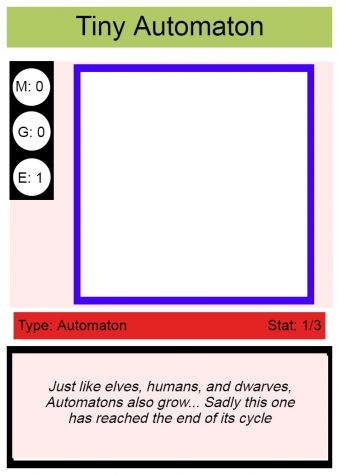
(Tiankuo Zhang)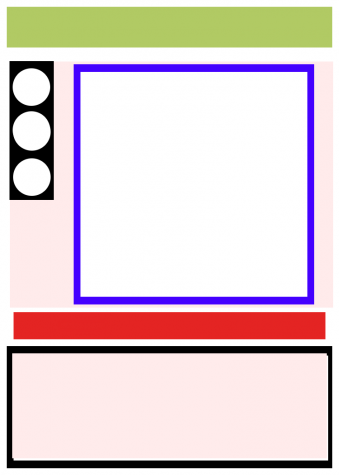
Source: https://thesciencesurvey.com/arts-entertainment/2021/03/21/blank-cards-how-do-you-create-a-card-game-from-scratch/
0 Response to "How to Make Art Into a Card for Games"
Enregistrer un commentaire